Are you passionate about capturing the beauty of everyday objects on canvas? Whether you’re a beginner eager to explore the world of acrylic painting or an advanced artist looking to refine your skills, our comprehensive free painting tutorials are designed to guide you through the enchanting process of creating stunning still-life compositions. With easy-to-follow instructions and expert tips, you’ll learn how to paint still-life with precision and creativity.
Acrylic painting is a versatile medium that allows artists to explore a wide range of techniques, from delicate washes to bold impasto. Its quick-drying nature and vibrant colors make it an excellent choice for still-life paintings, where capturing the essence of objects with detail and depth is key. Our free acrylic painting lessons offer you the perfect opportunity to delve into this exciting art form, whether you’re just starting out or looking to enhance your skills.
We understand that learning a new technique can be daunting, which is why our free painting tutorials are structured to suit artists of all levels. Each tutorial is broken down into manageable steps, ensuring that you can follow along at your own pace and develop your own style. Below, we present three carefully selected lessons that cover different aspects of still-life painting.
In this tutorial, you will learn how to paint still-life with a focus on capturing the delicate beauty of flowers arranged in a glass jar. This lesson is perfect for those who want to master the play of light and transparency in their paintings. With detailed explanations on color mixing and brush techniques, this tutorial will guide you through the entire process, from sketching your composition to adding the final touches.
For those looking to challenge themselves, this real-time tutorial offers an in-depth look at painting metallic and glass objects. You’ll learn how to achieve a realistic shine on the silver teapot and the reflective qualities of the glass cup. This lesson is ideal for artists who want to develop their skills in rendering different textures and materials in acrylic painting.
This advanced tutorial takes you through the steps of painting a complex still-life composition featuring various food items. From the scales of the fish to the papery skin of the garlic, you’ll discover techniques for creating realistic textures and vibrant colors. This lesson is perfect for artists who are ready to take their still-life painting to the next level.
If you’re hungry for more easy acrylic painting tutorials, we have a wealth of resources available to help you continue your artistic journey. Our collection of free acrylic painting lessons covers a wide range of subjects and techniques, ensuring that you’ll find something to inspire you.
Explore more still-life acrylic painting tutorials here.
Our tutorials are designed to make still-life painting accessible to everyone. Whether you’re picking up a paintbrush for the first time or you’re a seasoned artist looking to refine your skills, our step-by-step approach ensures that you can achieve stunning results. Plus, with our free painting tutorials, you can learn at your own pace without any financial commitment.
Still-life painting is a timeless genre that allows artists to capture the beauty of the everyday. With our free acrylic painting tutorials, you’ll not only learn how to paint still-life but also develop a deeper appreciation for the art form. So grab your brushes and start your artistic journey today!
Subscribe and watch more on my youtube channel.
Welcome to our comprehensive collection of painting tutorials that will help you master the art of capturing the beauty of beaches and crashing waves. Whether you are a beginner or an advanced artist, these step-by-step exercises will provide you with the skills and techniques needed to create stunning coastal landscapes. So grab your brushes and let’s dive in!
Beaches and crashing waves are a popular subject for artists due to their dynamic nature and the sense of tranquility they evoke. Capturing the movement of waves and the play of light on the water can be both challenging and rewarding. By practicing these exercises, you will not only improve your painting skills but also learn to observe and appreciate the subtle nuances of coastal scenery.
Before we begin, let’s make sure you have all the necessary materials to complete these painting exercises:
| Materials | Description |
|---|---|
| Canvas or any Painting Surface | Choose a size that suits your preference. I mostly used 12×14 inches for my tutorials |
| Acrylic Paints | I used student grades like Sakura, Liquitex Basics and Pebeo Studio |
| Paint Brushes | My brushes are assorted. |
| Palette | For mixing and blending of colors |
| Palette | This is optional for textures |
| Water | I just use water for cleaning and even mixing to paints |
| Easel | Optional, for comfortable painting |
In this tutorial, we will start with a serene and calm beach scene. Follow these steps to create a peaceful coastal landscape:
You can watch the full lessons below for your practice. Enjoy!
You can also check more lessons here on my website.
Here are some additional tips and techniques to help you improve your beach and crashing waves paintings:
For more advanced techniques and inspiration, you can explore more free lessons on my youtube channel ART OF JOHN MAGNE LISONDRA, and don’t forget to SUBSCRIBE!
By following these painting exercises and incorporating the tips and techniques mentioned, you will be well on your way to mastering the art of painting beaches and crashing waves. Remember, practice is key, so don’t be afraid to experiment and make mistakes. With each stroke of your brush, you will gain confidence and improve your skills. So go ahead, unleash your creativity, and let the beauty of coastal landscapes inspire your artwork!
Waterfalls, with their cascading power and serene beauty, have captivated artists for centuries. Capturing their essence on canvas, however, can seem daunting. But fear not, aspiring landscape painters! This comprehensive guide will equip you with the skills and techniques to master waterfall painting in acrylics, transforming your blank canvas into a breathtaking masterpiece.
Before We Begin:

Step-by-Step:
1. Sketch the Landscape:
2. Establish the Background:
3. Paint the Rocks:
4. Capture the Power of Water:
5. Bring the Landscape to Life:
6. Enhance the Mood:
Pro Tips:
Tutorial Collections Below:
With dedication and these helpful steps, you’ll be well on your way to mastering the art of waterfall painting in acrylics. Remember, practice makes perfect, so grab your brushes, unleash your creativity, and let the beauty of cascading water flow onto your canvas!
Happy painting!
You can check my Youtube Channel for more FREE Lessons.
Acrylics are a fast-drying, water-resistant medium that’s great for creating works of art that you can display almost anywhere. If you’re interested in painting with acrylics but don’t know where to start, try exploring the world of trees. Trees are one of the most popular subjects among acrylic artists and for good reason: There is something soothing about their simple symmetry and endless variations.
Ideally, every artist has their own personal set of tree-inspired artwork hanging somewhere on their wall at home. But if that isn’t currently the case, it doesn’t mean you have to wait any longer to get started. In this blog post, we will show you how to paint a tree in acrylics using step-by-step instructions so you can get started right away.
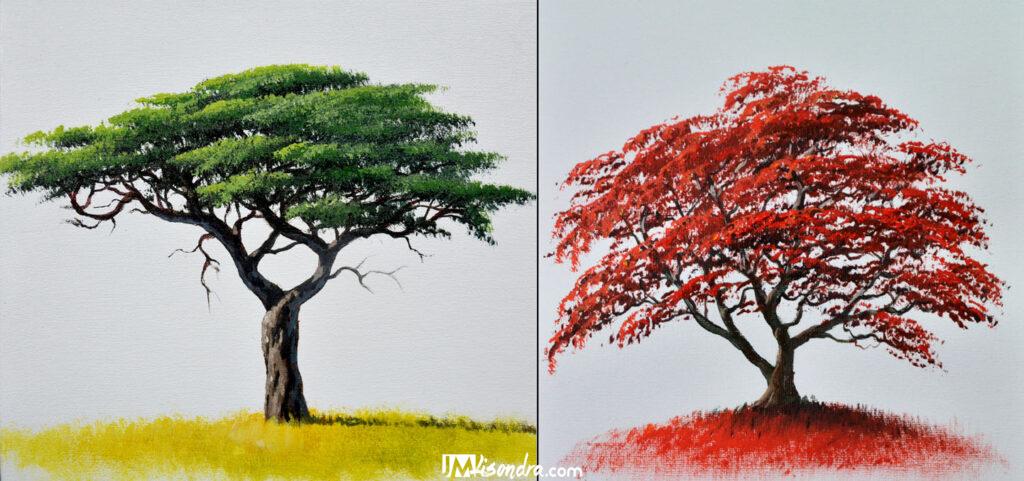
When it comes to a painting of a tree, it’s important to first decide on a color scheme. There are thousands of different color combinations you could use to paint your tree, but the best option is generally to choose two or three colors that compliment each other well. Having a theme in mind will help you create a consistent and cohesive painting. When you’re deciding on a color scheme, you should consider the season and the mood you want to convey.
For example, you can create a piece that embodies the autumn season by using rich oranges and reds, or paint a calming blue-green tree to represent the spring. You could also paint a vibrant, tropical tree in bold, tropical colors. No matter what you choose, keep in mind that the colors of your painting will affect the mood that is created by your artwork.
Before you jump into painting, it’s important to first sketch out your tree painting. Although the final product can be more spontaneous, there is really no replacement for a good sketch. It will help you to plan out both the composition and the details of your painting, while also allowing you to play around with different ideas and paint samples before committing to a final piece. For your sketch, you’ll want to draw out the various elements of your tree.
For example, you can sketch out the roots, trunk, branches, and leaves. Alternatively, you can focus on just one specific area of the tree, such as a single branch. Once you are finished sketching out your tree, you can draw guidelines on a piece of paper to help you further plan out your composition.
Before you start painting the details of your tree, you’ll want to create a background for your painting. This will help to establish a sense of depth in your artwork, as well as give your tree a more realistic appearance. There are many different ways you can create a background for your painting, such as by adding a colour wash or brushstrokes or by applying a coloured gel.
If you decide to create a wash, you can mix up your colour of choice with some water to create a consistency that can be applied easily. If you want to create a wash that is brighter, you can also try adding a drop of white acrylic paint to your colour of choice. Once you have your wash applied to the painting, let it dry so the paint can fully absorb into the paper before going on to the next step.
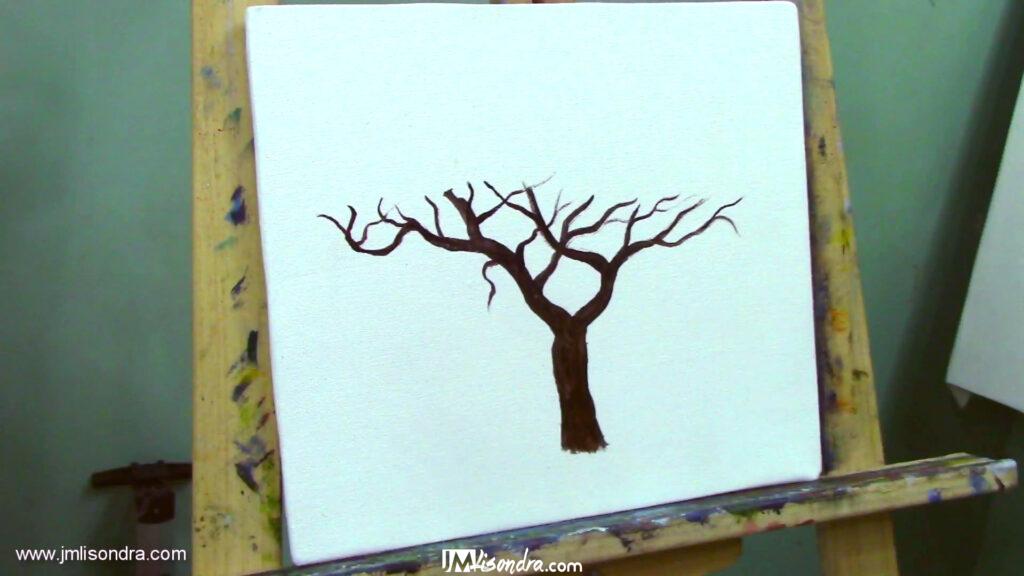
After you’ve applied your background, it’s time to start painting the trunk and branches of your tree. For the trunk, you’ll want to use a darker, richer colour than what you would use for the leaves, with a mix of blue and yellow being a popular choice. If you want to create a more realistic effect, try applying a thin layer of transparent paint over a thicker layer of the same colour. This will help to create a bark-like texture and add more realism to your tree.
For the branches, you can paint them in a variety of different colours and patterns, depending on what you’re aiming to create. Green and yellow are popular choices, but you can also try experimenting with colours like red, orange, and blue if you want to create a more tropical-looking tree.
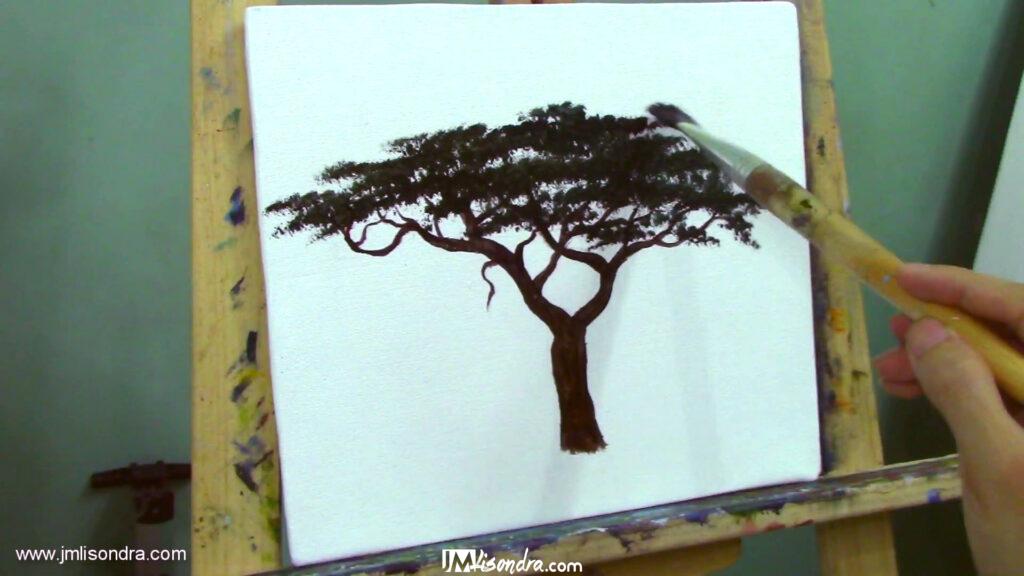
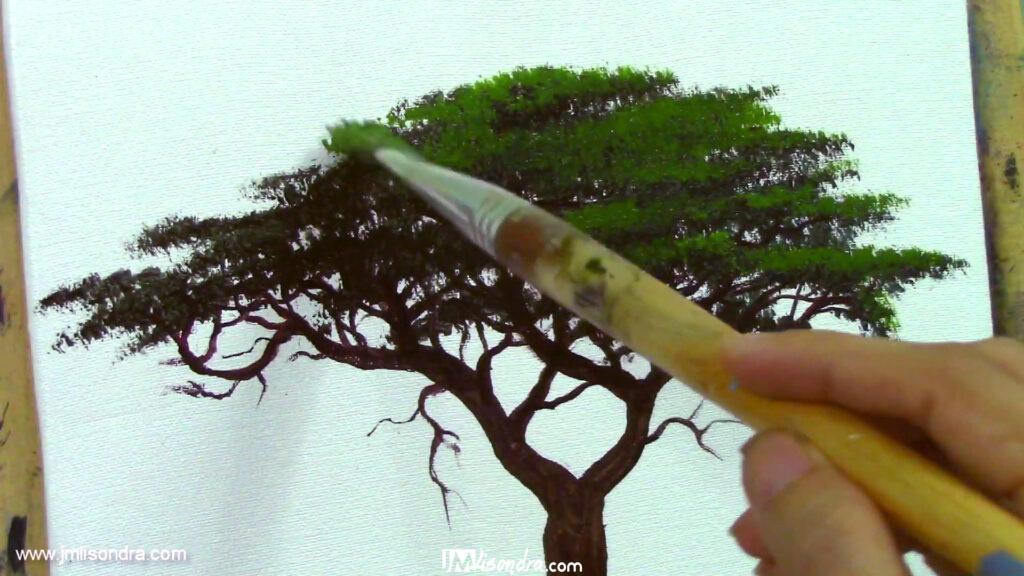

For the final steps of your painting, you’ll want to add the leaves and any other details your tree may have, such as flowers or fruit. For the leaves, you can mix up various colours of green to create a more autumnal look, or try using colours like yellow, blue, and red to create a more tropical tree. You can also try painting the leaves in multiple colours to create a more abstract appearance.
When it comes to adding any other details to your tree, keep in mind that less is more. If you want to add flowers to your tree, for example, try painting them somewhere on the trunk or near the base of the leaves. If you’re adding fruit, try painting it near the top of the tree where the leaves begin to grow.
Finally, after hours of painting and adding the final details, your tree painting is complete! Now that you’re finished, you can choose where to display your artwork. You could frame it and hang it in your house, give it as a gift to a loved one, or sell it if you’re interested in making a profit. No matter what you choose to do with your painting, remember to be proud of what you achieved and enjoy your new artwork!
You can also watch the process on how to paint tree leaves and bushes here.
Do you want to join and learn from my online course? You can check it now!


Comments